
Beyond the textbook: Overhauling Medical Curricula
Beyond the textbook: Overhauling Medical Curricula
UPDATED: Jul 1, 2026, 4:21:58 PM
Highlights
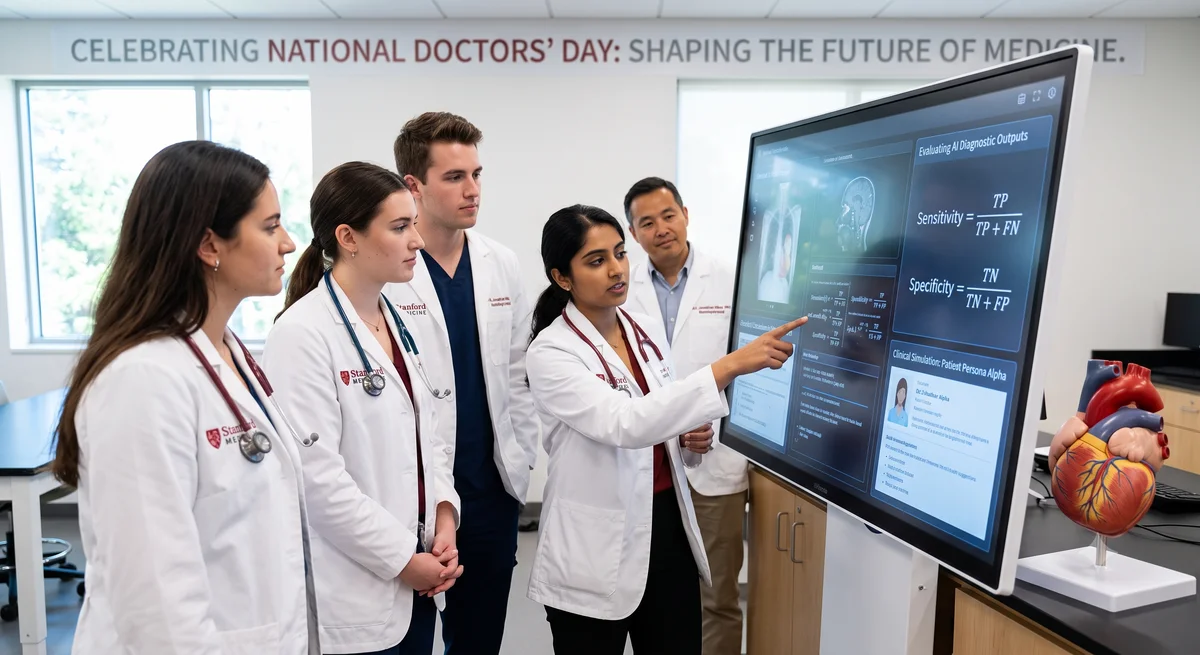
Preparing the next generation of medical practitioners requires a fundamental departure from traditional educational frameworks that rely heavily on the rote memorization of massive biological datasets. The rapid integration of machine learning platforms into routine clinical practice demands that incoming physicians possess comprehensive algorithmic literacy alongside standard clinical skills. Dr. Jonathan Chen, MD, PhD, a bioinformaticist and Stanford faculty member, stresses that academic institutions must adapt by teaching students how to critically evaluate, verify, and appraise automated diagnostic insights.
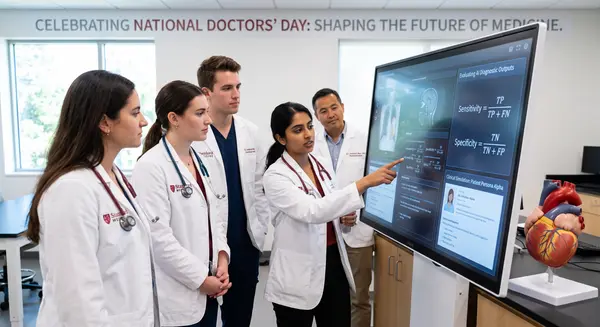
<p>"Unlike how there is a curriculum for teaching how the kidney works, we cannot pin down a fixed curriculum for AI in health care because the technology is a moving target" Modern medical training pipelines are addressing this educational target by incorporating interactive simulation tools and voice-to-voice patient personas to refine diagnostic reasoning. On National Doctors' Day, educators emphasize the importance of training students to evaluate algorithmic outputs using rigorous mathematical concepts. Future clinicians are instructed to calculate diagnostic sensitivities using the standard statistical equation Sensitivity = TP/(TP + FN), where TP represents True Positives and FN represents False Negatives. Assessing these metrics alongside specificities calculated via the formula Specificity = TN/(TN + FP) allows trainees to systematically spot algorithmic hallucinations and systematic biases. </p><p><br></p><p>Dr. Peter McCaffrey, MD, director of clinical informatics, provides a measured outlook on these automated diagnostic tools. "right now, AI tends to kind of regurgitate the scope of known things"</p>
Modernizing medical pedagogy ensures that upcoming graduates can confidently operate as computational editors while maintaining their fundamental identity as compassionate healthcare providers. Anchoring these training reforms on transparency and educational integrity will successfully bridge the gap between technological capabilities and human-centered clinical focus.
Tags: Nationaldoctorsday | Medicaleducation | Curriculumreform | Algorithmicliteracy | Medstudents | Clinicalreasoning | Medicalpedagogy | Educationalintegrity | Diagnosticsensitivity | Biomarkeranalysis | Futurephysicians | Digitalcompetency | Stanfordmedicine | Aamcprinciples | Trdeducation | Clinicaltraining |
Read More

Most Popular
Beyond the textbook: Overhauling Medical Curricula
Addressing Healthcare Barriers on World Hepatitis Day 2026
7 FDA Lung Cancer Approvals in 24 Months Every Doctor Should Know
Dr. Chandra Sekhar
Dr V Mohan Outlines Precision Medicine to Subdivide Indian Diabetes
Understanding Systemic Burnout and Policy Initiatives for Doctors
Restructuring Macronutrient Ratios Checks Indian Diabetes

Dr. Peter Schwarz Outlines IDF Strategies for Global Diabetes Crisis
Incorporating Imaging Refines Risk in CKM Syndrome
Powered by:
.png)
Awards & Recognitions:


Comments(0)