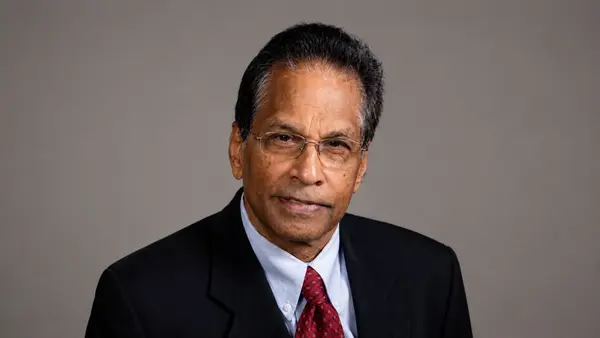
Challenges of Medical Education in India
Challenges of Medical Education in India
Prof. Dr. Vitull K. Gupta
UPDATED: Feb 23, 2021, 1:51:31 PM

The practice of Medicine was much simpler and easier earlier because patients had a lot of faith in this profession, to the extent that they compared doctors with God.
In good golden days, medical students used to imbibe basic communication skills consciously or subconsciously by observing their peers, senior colleagues, and teachers. Fortunately, almost all teachers were good role models and demonstrated exemplary compassion, empathy, and communication skills in their work.
Though not explicitly taught, these unspoken messages form part of the ‘hidden curriculum’, which influenced students’ development as physicians. With the changing times, the medical profession and medical education have undergone a drastic change under the hypnotizing influence of commercialization and greed for money.
Professional ethics are compromised for business ethics. Doctor-patient relationships, which were based on empathy and trust, have undergone a drastic change that has led to mistrust, dissatisfaction, and aggressive reactions.
Challenges in Medical Education:
As India marches towards an exciting new future of growth and progress, medical education is expected to play a pivotal role in crafting a sustained development agenda. The idea of creating a healthy society is no longer a debatable luxury; its significance has been grasped by policy shapers worldwide, especially in the post-COVID-19 era. In a developing nation like India, medical services play a very important role in the well-being of their citizens and indirectly play a very important part of the economic and overall development of the nation.
Medical education has shown tremendous growth so much so that under British rule, India had just 19 medical schools and by 1958, it became 86, to 112 by 1980, 381 (160 government and 188 private) by 2011 and now there are 497 medical colleges. Under the influence of privatization and corporatization, government medical colleges are surpassed by a phenomenal but unregulated growth of private medical colleges mired by inadequate faculty strength, ghost faculty, poor infrastructure, inadequate laboratories, or hospitals which has adversely impacted the quality of doctors.
Still, private medical colleges manage to get MCI permissions under the influence of cash, kind or politicians patronage and unethical, illegal practices are a common factor during inspections when hundreds of patients are transported to fill up empty medical wards, ghost faculty is paraded before the MCI inspectors, even instruments and equipment is hired or shifted between colleges. Standards of medical education and research have generally declined in most private medical colleges which have become a very lucrative business.
One revolutionary measure of the National Eligibility-cum-Entrance Test (NEET) initiated by the government which would have gone a long way to rationalize medical college admissions and almost eliminated capitation fee has miserably failed in its objective to provide opportunities to meritorious students irrespective of capacity to pay. Private medical colleges have increased their fee to match the capitation fee, making it difficult for even middle-class families to afford medical education. The NEET results of 2018 revealed that a decrease in qualifying cut-off marks has opened the doors to candidates with just 18-20% marks in the NEET aggregate.
The percentile system has played havoc with merit, making it easy for wealthy low-performers to buy seats. Commercialization of education has affected the mentality of students making them more materialistic, self-centered, without values of sacrifice, service, or commitment to the country and affected the chances of poor brilliant students to become a doctor. Medical education today has become a market investment and most doctors go to corporate to get handsome returns.
Medical education in India is at crossroads, maybe on the verge of collapse.
Factors contributing to this gloomy picture:
Each factor is a subject for extensive debate in itself:
*An exploding number of private medical colleges.
*A skewed distribution around the country.
*Devaluation of merit in admissions, particularly in private institutions; even after NEET.
*Admission of suboptimal quality of students with poor motivation.
*Increasing fees making medical education out of reach of poor or even middle-class students.
*An alarming shortage of teachers, increasing GHOST FACULTY.
*The gross shortage of patients in most of the private institutions, fulfill the MCI requirement with rented patients.
*A less than desirable evaluation system, contract to pass all students in private medical colleges.
*Poor internship learning and training because of the entrance test for PG.
*Confusion for a new curriculum may or may not be sensitive to social requirements.
*Neglected research and a lack of faculty development programs.
*Most importantly the miserable failure of the Medical Council of India to enforce MCI guidelines so much so that even after several complaints with photographic proofs against a local private medical college, MCI failed to order even an inquiry and let this medical college continue despite gross deficiencies and allowed PG seats under the hypnotizing influence of cash or kind.
Way Forward:
Medical education is the most neglected subject in India. Serious thought has to be given to the desirability of replacing one unsatisfactory and inefficient system of the Medical Council of India (MCI) with another more powerful, but equally non-accountable bureaucratic system of the National Medical Commission (NMC).
It is likely that government funding in medical education will be further curtailed in the future affecting public medical education and private colleges will be allowed to flourish and make profits. But India has to rethink its strategy to promote and invest in public health care including stress on public medical education with a strong regulation on private medical education. There has to be a separate budget for medical education and not as part of the health budget.
I strongly feel that comprehensive consideration of the issues plaguing medical education is urgently required to evolve solutions that may take care of the root of the problems and solutions which can be implemented in the short, intermediate, and long term to restore medical education to the pinnacle it had once reached.
It is surprising that there are no shrill voices of protest and professional organizations are conspicuous by their unawareness or lack of interest in the problem. Medical education should find a prime place and no one has the right to commodify it.
I feel that destroying education is going to destroy a nation and destroying medical education is going to destroy a nation’s health care system, so India needs to focus on medical education to strengthen the health care system.
The questions to be asked are:
‘Who will apply the brakes, is there still time to stop and reverse, and more importantly, is there a political will to do so?’
Challenges of Medical Education in India
Tags: Challenges Medical Education India Dr Vitull |
Most Popular

Back Pain During COVID-19
Dr. Kaushik Sil
Role of telemedicine in COVID-19 pandemic
Dr Hardeep Kaur Grewal
Lipedema: Mistaken for Obesity
DR. V.K.SRINAGESH
Orthopedics: the past, the present and back to the past to deal with the COVID-19 era
Dr N Somasekhar Reddy

Vitamin D Supplementation in Patients with Diabetic Retinopathy
Prof. Sandeep Saxena
More From TheRightDoctors
COVID-19: Effects on the Gastrointestinal Tract & Liver
Dr. Rajesh Upadhyay
Common Errors in Hypertension Measurement: Dr. Kamlesh Tewary
Dr. Kamlesh Tewary
Reminisces of a Surgical PG Student
Dr. Sayandev Das Gupta

Impact of Stress on Health
Dr. Manju Mehta
Trending
The Indispensable Role of SGLT2i in Heart Failure
Dr V Mohan Outlines Precision Medicine to Subdivide Indian Diabetes
What Nobody Tells You After a Lung Cancer Diagnosis
Dr. Chandra Sekhar