
How Mobile Stroke Units and AI are Rewriting the Golden Hour
How Mobile Stroke Units and AI are Rewriting the Golden Hour

Updated: Oct 29, 2026, 8:14:23 PM
Text Size:
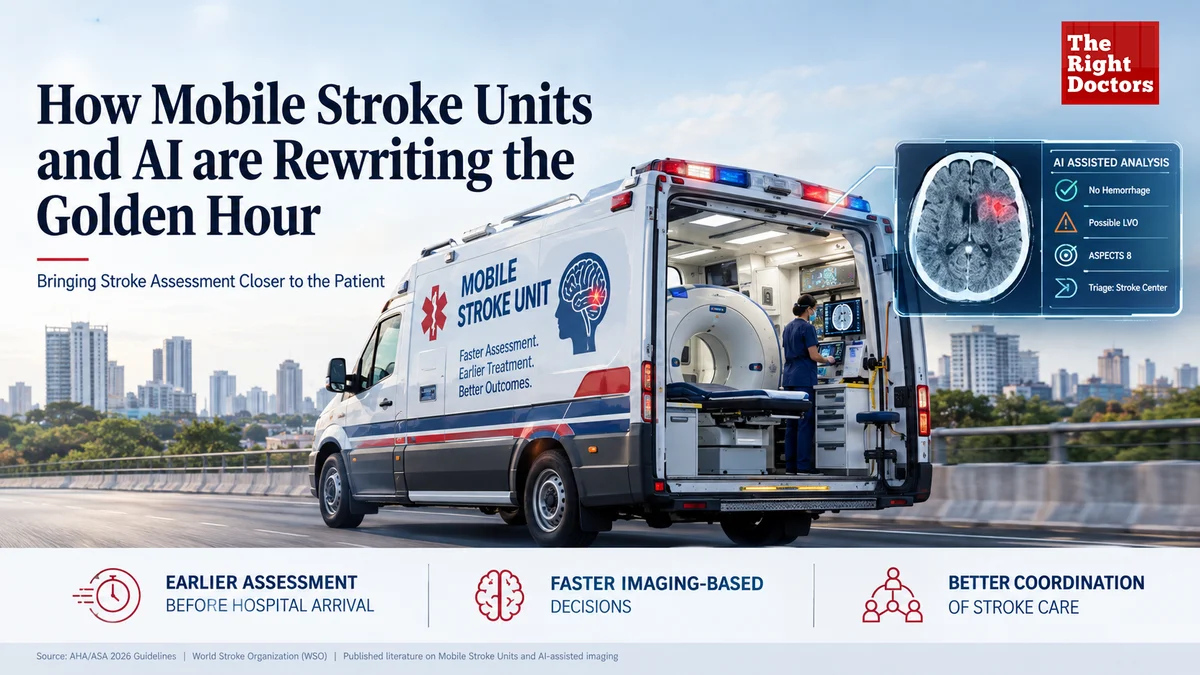
The traditional model of stroke care—waiting for a patient to arrive at the emergency room to begin diagnostic workups—is actively being dismantled. In 2026, the clinical paradigm is shifting toward highly coordinated pre-hospital intervention via Mobile Stroke Units (MSUs). These specialized ambulances, equipped with onboard CT scanners, point-of-care coagulation labs, and direct telehealth feeds to vascular neurologists, are fundamentally altering acute stroke algorithms.
"The expansion of Mobile Stroke Units is an innovative intervention proving its clinical effectiveness by bringing the stroke center directly to the patient's driveway," states Professor Jeyaraj Pandian, President of the World Stroke Organization.
Data backing the 2026 AHA/ASA guidelines confirms that MSUs reduce treatment delays by roughly 30 to 45 minutes compared to standard hospital evaluation. By allowing neuro-teams to safely administer single-bolus Tenecteplase (TNK) in the field, they bypass the traditional emergency department bottleneck entirely. When paired with FDA-cleared AI triage software that instantly reads the onboard CT scan and routes the ambulance directly to a comprehensive stroke center for Mechanical Thrombectomy, the system represents the most significant structural improvement to the "stroke chain of survival" in the last decade.
"Knowing the symptoms and signs of a stroke and acting fast can save a person's life, and integrating AI into emergency transport ensures that rapid action translates directly to brain tissue preservation," emphasizes Professor Sheila Martins, Immediate Past President of the World Stroke Organization.
Overcoming logistical barriers requires a massive overhaul of pre-hospital emergency systems, prioritizing the funding of MSUs and AI imaging networks in dense urban centers to slash door-to-needle and door-to-puncture times.
ALSO READ | The Twins Who Made Medical History — And the Nobel That Followed
ALSO WATCH | What Nobody Tells You After a Lung Cancer Diagnosis
Support TheRightDoctors
A fake news pandemic has taken the world by storm. More so for medical content.
We are witnessing a paradox of information overload and unanswered questions among both the lay public and the medical community.
TheRightDoctors brings you Insights from thought leaders across leading medical specialities. Views which help correct the information asymmetry and articulate the voice of medical science and reason.
This effort, however, needs your support.
Medical journalism is a niche which can survive only when it is adequately funded.
If you appreciate the work we do, we would like to request your support. Every contribution however big or small is valuable to us.
The options on this page enable you to choose between a one-time, monthly or annual payment. This is inclusive of GST. If you are a firm with GST, we will issue a GST invoice. Please reach out to us at support@therightdoctors.com
We thank you for your trust and your support.
SupportRead More
Most Popular

Dr. Peter Schwarz Outlines IDF Strategies for Global Diabetes Crisis
Dr V Mohan Outlines Precision Medicine to Subdivide Indian Diabetes
Dr. Enas A. Enas: Targeted Screening Essential to Stop Early Indian CA
Restructuring Macronutrient Ratios Checks Indian Diabetes
More from TheRightDoctors
Dr Chandrashekhar: Image Fat Depot Phenotypes | WCCKMM 2026
The Indispensable Role of SGLT2i in Heart Failure
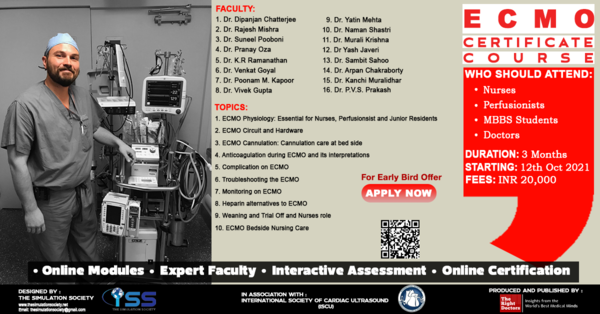
Click here to Register for ECMO course
Trending
Incorporating Imaging Refines Risk in CKM Syndrome
Putting AI to Work in Cardiovascular Care
Dr. Pankaj Manoria on Post-MI Antiplatelet Therapy Selection
Understanding Systemic Burnout and Policy Initiatives for Doctors
Powered by:

Awards & Recognitions:


