
Oral IL-23 Blockade and Metabolic Therapy Redefine Treatment
Oral IL-23 Blockade and Metabolic Therapy Redefine Treatment

Updated: Oct 30, 2026, 3:22:42 PM
Text Size:
Psoriasis management is entering a new therapeutic phase, with targeted oral immunotherapy and immunometabolic treatment strategies expanding the possibilities for systemic disease control.
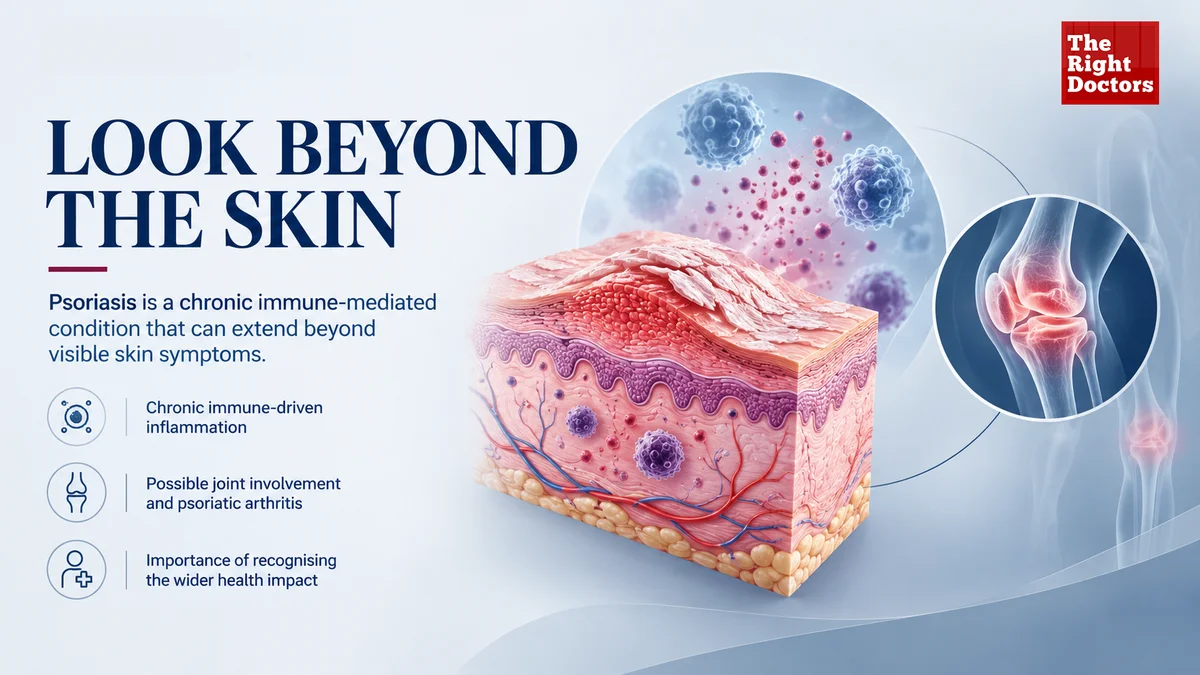
On World Psoriasis Day 2026, observed under the theme “Look Beyond My Skin,” two clinical developments highlight the changing landscape of psoriasis care: the emergence of icotrokinra, an oral peptide targeting the interleukin-23 (IL-23) receptor, and clinical evidence supporting the combination of metabolic therapy with targeted biologic treatment.
Psoriasis is increasingly recognised as a systemic immune-mediated inflammatory disease involving the IL-23/IL-17 pathway, rather than simply a disorder of epidermal hyperproliferation. Although biologics targeting IL-23 and IL-17 have substantially improved treatment outcomes, injectable administration, treatment resistance and associated metabolic comorbidities remain important clinical considerations.
Icotrokinra, an oral IL-23 receptor antagonist, represents a new approach to targeted systemic treatment. By selectively inhibiting IL-23 receptor signalling, the peptide aims to interrupt the inflammatory pathway responsible for driving psoriatic skin disease while offering the convenience of oral administration.
In the Phase 3 ICONIC-ADVANCE 1 and 2 trials, icotrokinra demonstrated superior efficacy to deucravacitinib in patients with moderate-to-severe plaque psoriasis. At Week 16, PASI 90 responses were reported in 58.0% of patients receiving icotrokinra, compared with 34.0% receiving deucravacitinib. Clear or almost-clear skin, assessed through the static Physician Global Assessment, was achieved by 71.2% of patients receiving icotrokinra.
These findings highlight the potential of oral targeted immunotherapy to deliver high levels of skin clearance without requiring injectable biologic administration. However, long-term safety, durability of response and affordability will remain important considerations in clinical practice.
A second development focuses on the relationship between psoriasis and metabolic dysfunction. Obesity and excess adiposity are associated with increased inflammatory activity and poorer treatment outcomes in some patients with psoriasis. Addressing metabolic comorbidities may therefore complement conventional dermatological treatment.
The Phase 3b TOGETHER-PsO trial investigated the combination of tirzepatide, a dual GIP/GLP-1 receptor agonist, and ixekizumab, an IL-17A inhibitor, in patients with moderate-to-severe psoriasis and overweight or obesity. The combination achieved the coprimary endpoint of complete skin clearance alongside at least 10% body-weight reduction in 27.1% of patients, compared with 5.8% receiving ixekizumab alone at Week 36.
The findings support growing interest in integrating metabolic management into psoriasis treatment, particularly for patients with obesity and persistent disease activity. However, the contribution of weight reduction to improved skin outcomes requires further investigation.
For India, these developments may offer new opportunities to improve systemic psoriasis care, particularly where prolonged reliance on topical corticosteroids and delayed referral for systemic treatment remain concerns. Oral targeted therapies could reduce barriers associated with injections and cold-chain logistics, although affordability and regulatory availability will determine their practical accessibility.
Together, these advances reinforce a broader shift in psoriasis management: treating the inflammatory disease while addressing the metabolic and systemic factors that may influence its severity. As treatment options evolve, comprehensive assessment of skin disease, metabolic health and associated inflammatory conditions will remain central to improving long-term patient outcomes.
ALSO READ | How Mobile Stroke Units and AI are Rewriting the Golden Hour
ALSO WATCH | The Twins Who Made Medical History — And the Nobel That Followed
Support TheRightDoctors
A fake news pandemic has taken the world by storm. More so for medical content.
We are witnessing a paradox of information overload and unanswered questions among both the lay public and the medical community.
TheRightDoctors brings you Insights from thought leaders across leading medical specialities. Views which help correct the information asymmetry and articulate the voice of medical science and reason.
This effort, however, needs your support.
Medical journalism is a niche which can survive only when it is adequately funded.
If you appreciate the work we do, we would like to request your support. Every contribution however big or small is valuable to us.
The options on this page enable you to choose between a one-time, monthly or annual payment. This is inclusive of GST. If you are a firm with GST, we will issue a GST invoice. Please reach out to us at support@therightdoctors.com
We thank you for your trust and your support.
SupportRead More

Most Popular
Addressing Healthcare Barriers on World Hepatitis Day 2026

Dr. Peter Schwarz Outlines IDF Strategies for Global Diabetes Crisis
Dr V Mohan Outlines Precision Medicine to Subdivide Indian Diabetes

Dr. Enas A. Enas: Targeted Screening Essential to Stop Early Indian CA
More from TheRightDoctors
Restructuring Macronutrient Ratios Checks Indian Diabetes
Dr Chandrashekhar: Image Fat Depot Phenotypes | WCCKMM 2026
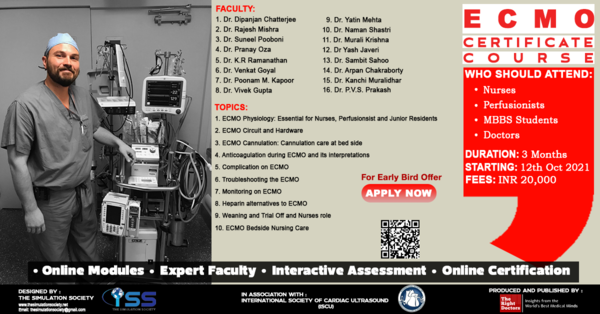
Click here to Register for ECMO course
Trending
The Indispensable Role of SGLT2i in Heart Failure
Incorporating Imaging Refines Risk in CKM Syndrome

Putting AI to Work in Cardiovascular Care

Dr. Pankaj Manoria on Post-MI Antiplatelet Therapy Selection
Powered by:

Awards & Recognitions:


